




The Monaco Grand Prix remains one of the world's most historic races, one of the most glamorous, and one of the most famous. It's got more tales of daring drivers and prestigious prince-laden podiums than any other Grand Prix on the Formula One calendar, with a sprinkle of modern controversy too.
But how did it come to be one of the most renowned motor racing events on the planet?
Monaco's Unusual Start
It all started in 1925 when the Automobile Club de Monaco (ACM), under the leadership of father-and-son duo Alexandre and Antony Noghès, decided to bring the European motor racing craze to the streets of the microstate. But this wasn't because the ACM wanted the best drivers racing within their borders, as you might think.

Instead, they just wanted recognition of their association by the AIACR, now known as the FIA, to become a national motoring club rather than a regional one. It so happens that hosting an international racing event wholly within their territory was a prerequisite for this title, leading to the butterfly effect that created what is known as F1's jewel in the crown event.
Noghès worked for three years to create a suitable route for the circuit, working with local luminaries including Louis Chiron, who would become the most successful Monégasque racing driver before Charles Leclerc.
After years of planning, the race needed funding. In 1928, the Societe des Bains de Mer, a partly state-owned company that owns the Monte Carlo Casino, underwrote the financing, and the Grand Prix was off the ground. Noghès' dream was reality, and the ACM became a national body recognized by the AIACR.
Early Races Around Monte Carlo
The first event, held on April 14, 1929, was won in a shock result by Englishman William Grover-Williams as the only competitor not from mainland Europe. The race went from strength to strength from then on, despite the restrictions imposed by running a race around the Principality that seemed in contrast to its tiny area.
How could cars snake around its narrow streets at high speeds without immense danger for its participants and spectators? Don't forget that these groundbreaking Grands Prix were long before modern health and safety regulations. Helmets were not mandatory, and there was nothing to stop cars from endangering the public, or, indeed, the drivers.
However, there was danger to the event itself. The ACM suffered financial troubles in 1938, cancelling the race. Attempts to bring the Grand Prix back for 1939 began, but the outbreak of the Second World War abruptly ended that idea.

The war's continuation until 1945 meant that there would be no races until then, while further financial problems stopped the race from returning until 1948. In that year, the race returned, but the event was lost again in 1949 as the nation mourned the death of Prince Louis.
The dawn of the Formula One World Championship in 1950 brought new prestige to racing in the Principality, though, and the Monaco GP returned after a two-year absence. Juan Manuel Fangio won the first Monaco GP under the new system.
Even then, the race couldn't find stability, and it did not feature in 1951, 1953, or 1954. However, from 1955 onwards, the race remained on the F1 calendar every year aside from the Covid-affected 2020 season, with F1 greats including Graham Hill and Ayrton Senna becoming masters of the famous circuit.
A Triple Crown Event
Every F1 driver wants to win every race, yet Monaco has an extra allure. The Monte Carlo circuit isn't a track designed in an office by committee, like modern F1 venues. This track was created almost a century ago, with history pouring out of every pavement. F1 legends from every generation, every era have won here, from Juan Manuel Fangio and Stirling Moss to Max Verstappen and Lewis Hamilton.
Yet there's another reason why F1 drivers want to win this one more than any other. Alongside the Le Mans 24 Hours and the Indianapolis 500, it's seen as one of the 'Triple Crown' of races. The nature of global motorsport and F1's status as the home of the best drivers means that only they get the opportunity to win all three of these races.

It's an unofficial moniker, with no regulatory body or organization ready to award anyone who takes victory in all three. Yet ask anyone in motor racing if they know what the Triple Crown is, and they'll tell you all about this trio of events. Graham Hill, a five-time winner around Monaco, is the only human in history to take the accolade, but several drivers have two of the three to their name.
Fernando Alonso is one of those drivers. The 2006 and 2007 Monaco GP winner won the Le Mans 24 Hours in 2018 and 2019, allowing him to complete the Triple Crown if he wins the Indianapolis 500. He hasn't yet won after three attempts, but don't rule it out.
While Indy and Le Mans see single-race entries fairly regularly, the Monaco GP's barrier to entry is a full-time F1 seat that drastically increases its exclusivity. This simple fact makes Monaco the most exclusive of the three Triple Crown events. Global motor racing really doesn't get much more prestigious than that.
Notable Monaco GP Moments
In its 96 years, Monaco has seen more than its fair share of thrills, spills, and drama. In 1955, Alberto Ascari crashed his Scuderia Lancia car into the Monaco harbor. Miraculously, he survived with only a broken nose, but it demonstrated the courage required for drivers to race around Monaco in its early years. Drowning, after all, is not ordinarily a concern when racing in motorsports.
Ayrton Senna burst onto the F1 scene in Monaco some 29 years later in 1984. In an unfancied backmarker Toleman car, he chased down McLaren's championship leader Alain Prost in the pouring rain, rising from 13th on the grid to P2.
With the Brazilian about to pounce on his French rival, race officials brought out the red flags due to the conditions. Senna didn't win, but he had announced himself as one of F1's most exciting young drivers. Monaco had unknowingly staged the prologue of the most famous rivalry in the sport's history.
Fast-forward to 2024, and Charles Leclerc delivered one of the most famous Monaco wins of all time. The Ferrari driver, who was the first full-time Monégasque F1 driver since Chiron, put in a masterful drive to win his home race for the very first time.
It was a truly memorable performance from a driver who had seemed cursed when he raced at the circuit before then. For a nation of only 38,400 residents, fewer than 10,000 being Monégasque, Leclerc's victory truly defied the odds.
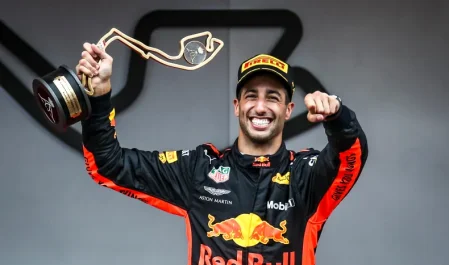
Throw in the 1996 race with only three finishers, Senna's 'out-of-body' pole lap from 1988, Red Bull's pit stop fiasco that cost Daniel Ricciardo victory in 2016 before the Aussie's six-gear redemption win in 2018, and the decade-long domination between Prost and Senna through the 80s and 90s, you'll see why Monaco has such a reputation.
Monaco's Contemporary Controversial F1 Spot
That's not to say that the Monaco GP is faultless. Its history defies its place on the calendar, thanks to the geographical confines of a tiny country. Nestled on the Cote d'Azur cliffs, the resulting circuit is inevitably extremely narrow. The combination of the compact surroundings and the extremely wide modern F1 cars means that overtaking is practically impossible. As such, the races have become dull and without a competitive aspect.
F1 has attempted to rectify this. In 2025, they mandated that each driver must make two pit stops. With on-track passing becoming nearly impossible, the only real way to overtake is in the pits. There was hope that different strategies could play out with the new ruling. However, teams used the opportunity to maintain their current positions, if feasible.
Many, most notably Williams, would make a pit stop for one driver while asking their other driver to drive slowly to hold up competitors. As ever in Formula 1, finding loopholes in rulesets and exploiting them is what the teams do best. This two-stop mandate gave the race an artificial element, and F1 has confirmed that they will not enforce the rule again in 2026.

Although many were quick to criticize the farcical scenes, it is a sign that F1 recognizes the issues with Monaco today and wants a solution.
Why Monaco Remains Special
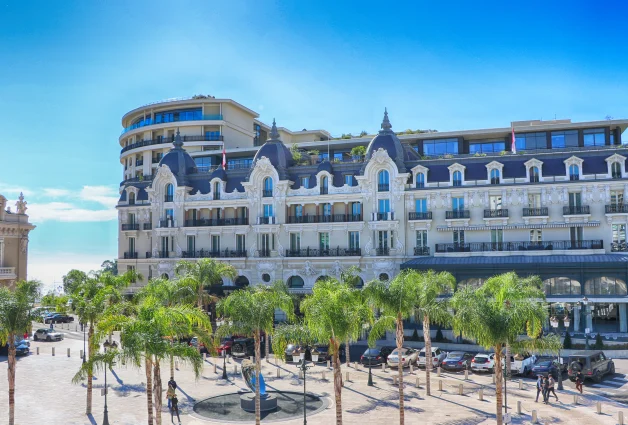
The racing in Monaco may not be of the highest quality in comparison to other F1 circuits. However, the glamour, history, and prestige of the event are unmatched. Decades before the world's rich and famous attended the Las Vegas Grand Prix, they flocked to Monaco. The season-ending Abu Dhabi GP is at Yas Marina, in a clear nod to the desire for imagery similar to the packed harbor of Monte Carlo on a race weekend.
The beauty of the location, the fact that the sovereign head of state, currently Prince Albert, presents the trophies, the triple crown status, and even the name of the 'Monaco Grand Prix'. It all comes together to make Monaco one of the most enduringly special events on the entire F1 calendar.


View the article image gallery